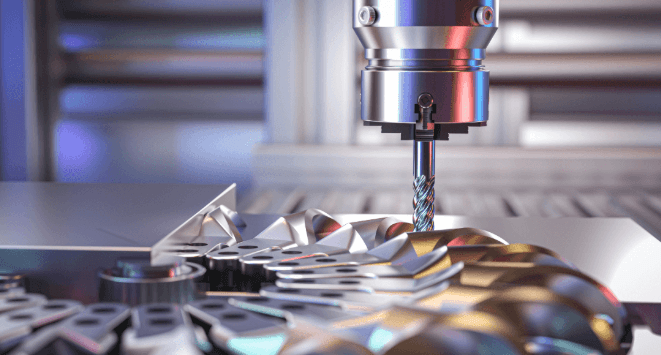
Precision CNC Machining: Achieving Tight Tolerances in Complex Parts
In high-stakes industries such as aerospace, medical devices, defense, and precision instrumentation, dimensional accuracy is not merely a manufacturing target — it is a fundamental requirement that determines whether a component will function correctly or fail. Precision CNC machining delivers the tight tolerances and exceptional surface quality these applications demand, combining advanced machine tools, cutting-edge metrology, and deep process expertise to produce parts that meet the most demanding specifications.
What Is Precision CNC Machining?
Precision CNC machining refers to machining operations that routinely achieve dimensional tolerances of ±0.005mm (±0.0002 inches) or tighter, with surface finishes measured in fractions of a micron. Achieving these results requires purpose-built machine tools, thermally-stable working environments, specialized cutting tools, and rigorous process control.
Machine Tool Requirements for Precision Machining
Precision machining requires machine tools with exceptional rigidity, thermal stability, and positioning accuracy. Linear scales provide direct feedback of axis position, minimizing the effects of thermal growth and mechanical backlash. Spindles with sub-micron runout specifications ensure cutting tool accuracy.
Environmental Control
Temperature variation causes thermal expansion of machine components that can exceed tolerance requirements for precision work. Precision machining facilities maintain shop floor temperatures within ±1°C or better to minimize these effects. Vibration isolation also prevents floor vibrations from affecting surface finish.
- Machine tool positioning accuracy to ±0.001mm
- Spindle runout typically below 1 micron (0.001mm)
- Temperature-controlled working environment
- In-process measurement with probing systems
- Air gauging or CMM verification of critical dimensions
Materials Commonly Used in Precision CNC Machining
Precision machining is applied across a wide range of materials, each with distinct machining characteristics that precision CNC machining specific tooling, speeds, feeds, and cutting fluid strategies to achieve tight tolerances and excellent surface finish.
Aluminum Alloys
Aluminum is the most commonly precision-machined material due to its excellent machinability, light weight, and wide availability. Alloys such as 6061-T6 and 7075-T6 are popular choices for structural applications, while 2024-T4 is used where higher strength is required.
Quality Assurance in Precision CNC Machining
Comprehensive quality assurance is inseparable from precision machining. This includes incoming material verification, in-process measurements, final inspection with calibrated instruments, and full traceability documentation.
- Material certifications with chemical composition and mechanical properties
- First article inspection report (FAIR) for new part numbers
- CMM measurement of critical dimensions and GD&T features
- Surface roughness measurement on specified surfaces
- Complete dimensional report accompanying each shipment
See also: How to Improve Business Communication
Frequently Asked Questions
What tolerances can precision CNC machining achieve?
Modern precision CNC machining can achieve tolerances of ±0.005mm or better for typical features. For ultra-precision applications such as optics, gauges, and certain medical devices, tolerances of ±0.001mm (1 micron) can be achieved with specialized equipment and processes.
What surface finishes are achievable with CNC machining?
Standard CNC milled surfaces achieve Ra 1.6 to 3.2 microns (63 to 125 microinch). With fine finishing cuts and optimized parameters, Ra 0.4 to 0.8 microns is achievable. Grinding can achieve Ra below 0.1 microns for extremely smooth surfaces.
How do I specify tolerances on my engineering drawings for CNC machining?
Use the ASME Y14.5 or ISO GPS standards for dimensioning and tolerancing. Apply tolerances only to critical features, as unnecessarily tight tolerances on non-critical dimensions significantly increase machining cost. Consult with your machining service provider during design.
Conclusion
Precision CNC machining is a sophisticated manufacturing process that requires equal measures of advanced equipment, expert knowledge, and disciplined quality systems. For applications where dimensional accuracy truly matters, selecting a machining partner with deep precision machining expertise, appropriate equipment, and a commitment to quality assurance is essential. The investment in precision manufacturing pays dividends through improved product reliability, reduced assembly issues, and superior end-product performance.